Below you will find pages that utilize the taxonomy term “Network and Route Building”
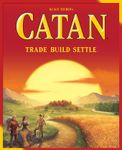
CATAN
CATAN In CATAN (formerly The Settlers of Catan), players try to be the dominant force on the island of Catan by building settlements, cities, and roads. On each turn dice are rolled to determine what resources the island produces. Players build by spending resources (sheep, wheat, wood, brick and ore) that are depicted by these resource cards; each land type, with the exception of the unproductive desert, produces a specific resource: hills produce brick, forests produce wood, mountains produce ore, fields produce wheat, and pastures produce sheep.
read more
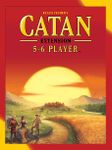
Catan: 5-6 Player Extension
Catan: 5-6 Player Extension Allows you to add up to two more opponents to The Settlers of Catan. The only change in the rules is that there is a building round at the end of each turn in which any player can build.Belongs to the Catan Series.Expands:CatanExpanded by:Catan: Seafarers – 5-6 Player ExtensionCatan: Cities & Knights – 5-6 Player Extension
read more
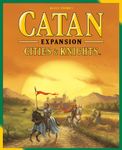
Catan: Cities & Knights
Catan: Cities & Knights Adds several new aspects to Settlers of Catan but the two major ones are creating knights to protect the land from invading barbarians and building city improvements that confer benefits upon that city’s owner. Adds tactical complexity to the game and game length.Belongs to the Catan Series.The game changes the base game in three main ways:First, there are 3 new commodities in the game, distinct from resources - paper, cloth, and coins, which can be acquired from Forest, Meadow, and Mountain spaces, respectively.
read more
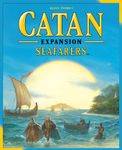
Catan: Seafarers
Catan: Seafarers This is an expansion for The Settlers of Catan. Players can build shipping lanes, which are very similar to roads. Additionally, the game comes with many different water-hex-heavy variant setups. The American version (Mayfair) should only be used with the American base game, instead of the German one (Kosmos), because of matching components and for the same reason, the Kosmos German version should only be used with the German base game.
read more
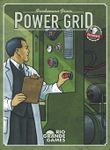
Power Grid
Power Grid Power Grid is the updated release of the Friedemann Friese crayon game Funkenschlag. It removes the crayon aspect from network building in the original edition, while retaining the fluctuating commodities market like Crude: The Oil Game and an auction round intensity reminiscent of The Princes of Florence.The objective of Power Grid is to supply the most cities with power when someone’s network gains a predetermined size. In this new edition, players mark pre-existing routes between cities for connection, and then bid against each other to purchase the power plants that they use to power their cities.
read more
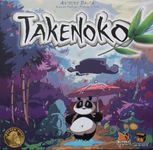
Takenoko
Takenoko A long time ago at the Japanese Imperial court, the Chinese Emperor offered a giant panda bear as a symbol of peace to the Japanese Emperor. Since then, the Japanese Emperor has entrusted his court members (the players) with the difficult task of caring for the animal by tending to his bamboo garden.In Takenoko, the players will cultivate land plots, irrigate them, and grow one of the three species of bamboo (Green, Yellow, and Pink) with the help of the Imperial gardener to maintain this bamboo garden.
read more
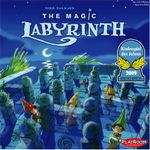
The Magic Labyrinth
The Magic Labyrinth The little magician apprentices have lost some magic objects inside of the master’s maze. Now they try to collect them before the Master notices anything. However, in the maze there are invisible walls and only one of the missing objects is revealed at a time. So they have to make their way through the maze by means of a good memory and lots of skill.Each player moves their magician over the board while trying not to bump the labyrinth below.
read more
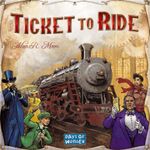
Ticket to Ride
Ticket to Ride With elegantly simple gameplay, Ticket to Ride can be learned in under 15 minutes. Players collect cards of various types of train cars they then use to claim railway routes in North America. The longer the routes, the more points they earn. Additional points come to those who fulfill Destination Tickets – goal cards that connect distant cities; and to the player who builds the longest continuous route.
read more
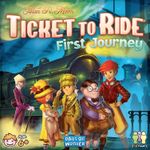
Ticket to Ride: First Journey (U.S.)
Ticket to Ride: First Journey (U.S.) Ticket to Ride: First Journey takes the gameplay of the Ticket to Ride series and scales it down for a younger audience.In general, players collect train cards, claim routes on the map, and try to connect the cities shown on their tickets. In more detail, the game board shows a map of the United States with certain cities being connected by colored paths. Each player starts with four colored train cards in hand and two tickets; each ticket shows two cities, and you’re trying to connect those two cities with a contiguous path of your trains in order to complete the ticket.
read more
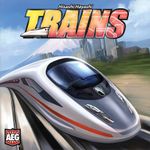
Trains
Trains In the 19th century, shortly after the industrial revolution, railways quickly spread over the world. Japan, importing Western culture and eager to become one of the Grand Nations, saw the birth of many private railway companies and entered the Golden Age of railways. Eventually, as a result of the actions of powerful people and capitalists, many of these smaller companies gradually merged into larger ones.In Trains, the players are such capitalists, managing private railways companies and striving to become bigger and better than the competition.
read more